Forum Awards Program

The Vertical Flight Society's Awards Program was initiated in 1944 and over the years has paid tribute to the world's outstanding leaders in industry, government and academia. The number of awards presented annually has grown steadily, as has the prestige and importance associated with them. The Vertical Flight Society Awards Program acts as a catalyst for stimulating technological advances in vertical flight aircraft.
The 2026 Awards Ceremony will take place during Forum 82 on Wednesday, May 6, 2026, from 7:00pm–9:00pm. The program schedule is below.

Welcome
Angelo Collins
Executive Director
Vertical Flight Society
Steve Schmidt
Sikorsky, A Lockheed Martin Company
VFS Membership
VFS Chapter Member and Percentage Increase
Enrico Forlanini Italy Chapter
Accepted by Prof. Giuseppe Quaranta and Luca Medici
Awarded to the VFS chapter with the greatest net growth and percentage increase.
Forum Technical
Dr. Al Brand
Bell Textron
Recognition of Forum 82 Technical Chair
Dr. Karen M. Feigh, Georgia Tech

Alexander A. Nikolsky Honorary Lectureship
William "Bill" A. Welsh
Lockheed Martin Senior Technical Fellow (Emeritus)
Sikorsky, a Lockheed Martin Company
Selected as the 46th Alexander A. Nikolsky Honorary Lecturer, Mr. Welsh has had a distinguished 44-year career at Sikorsky, a Lockheed Martin Company, playing a central role in transforming the field of rotorcraft vibration control.
A gifted mentor and educator, Bill has supported generations of engineers through senior design sponsorship, university engagement, and decades of service within VFS and AIAA. He is a Lockheed Martin Senior Fellow, VFS Honorary Fellow, VFS Technical Fellow, Klemin Award recipient, AIAA Fellow, and holds more than 40 U.S. patents. Mr. Welsh is also a newly elected member of the National Academy of Engineering.
Given to an individual who has a highly distinguished career in vertical flight aircraft research and development and is skilled at communicating their technical knowledge and experience.

Technical Fellows
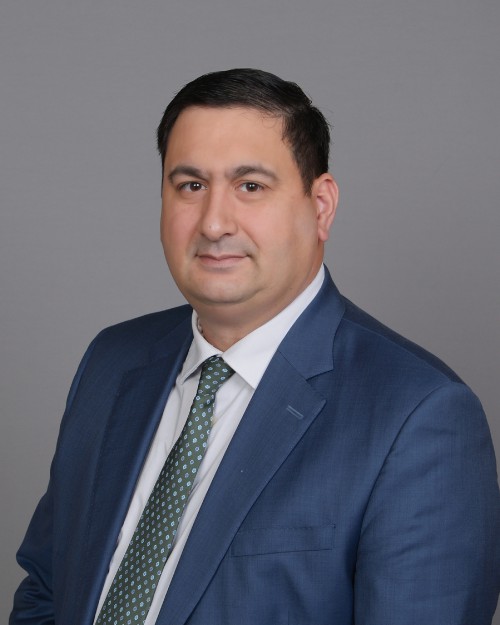
Jeffrey Sinsay
US Army
Dr. Jeffrey Sinsay, Aerospace Engineer formerly with the U.S. Army, is recognized for advancing rotorcraft conceptual design through the development of innovative aircraft design methods and tools. His technical leadership has been instrumental in Army Aviation modernization efforts, while his mentorship has helped shape the next generation of vertical flight engineers.
VFS Technical Fellowships are granted to Society members whose career-based accomplishments towards the goals and objectives of the vertical flight community constitute an outstanding technical achievement.
Technical Fellows
Manikandan Ramasamy
US Army DEVCOM AvMC
Dr. Manikandan Ramasamy, Research Scientist in the Experimental Aeromechanics Branch at the U.S. Army DEVCOM Aviation & Missile Center, is recognized for advancing rotorcraft aeromechanics through innovative experimental methods and insights into complex aerodynamic physics. His work has enhanced rotorcraft design capabilities, while his mentorship supports the next generation of vertical flight engineers.
VFS Technical Fellowships are granted to Society members whose career-based accomplishments towards the goals and objectives of the vertical flight community constitute an outstanding technical achievement.

Technical Fellows
Robert McKillip Jr.
Continuum Dynamics Inc.
Dr. Robert McKillip Jr., Senior Associate at Continuum Dynamics, Inc., is recognized for decades of leadership in rotorcraft flight dynamics, advancing modeling, simulation, and control technologies for VTOL aircraft. His innovations and mentorship have had a lasting impact across the vertical flight community.
VFS Technical Fellowships are granted to Society members whose career-based accomplishments towards the goals and objectives of the vertical flight community constitute an outstanding technical achievement.
Technical Fellows
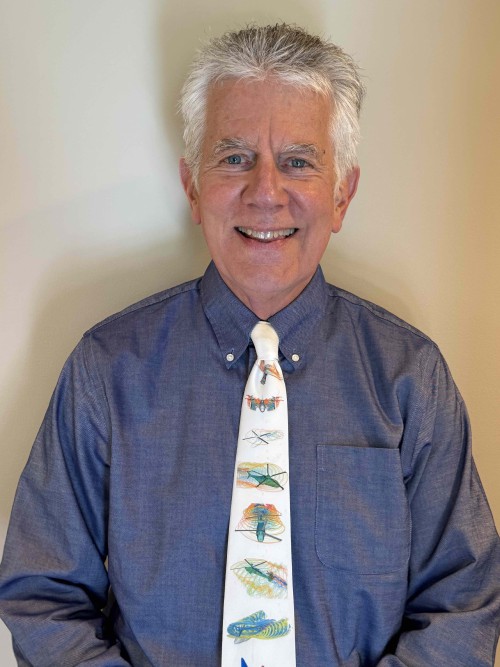
Sung Nam Jung
Konkuk University
Dr. Sung Nam Jung, Professor at Konkuk University, is recognized for his pioneering contributions to rotorcraft aeromechanics, including advanced testing methods, composite modeling, and high-fidelity analysis. His work and global leadership have significantly advanced the vertical flight community.
VFS Technical Fellowships are granted to Society members whose career-based accomplishments towards the goals and objectives of the vertical flight community constitute an outstanding technical achievement.

Leonardo International Fellowship Award
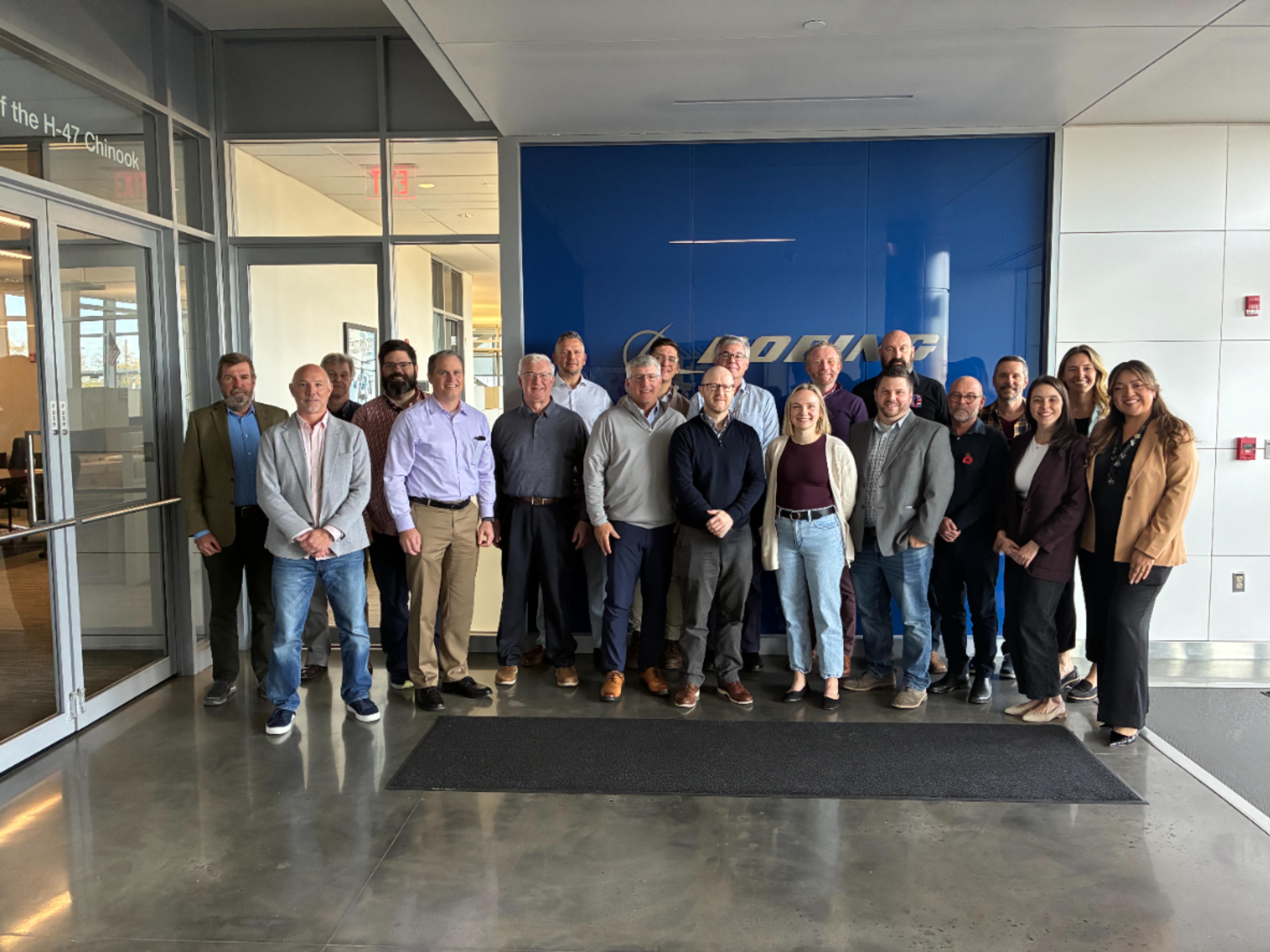
H-47 UK Extended Range Certification Team
The Boeing Company
The H-47 UK Extended Range Certification Team is recognized for achieving the first-ever certification of a Chinook helicopter to UK DEF-STAN 970 standards and delivering a UK-signed Certificate of Design. This landmark effort established a unified airworthiness framework bridging military and commercial standards, enabling faster fielding for allied forces while creating a repeatable model for future multinational certification programs.
Recognizes significant contributions to the extension of fellowship and accomplishment in the international vertical flight community.
Frederick L. Feinberg Award
John Rucci
Sikorsky, a Lockheed Martin Company
This year’s Frederick L. Feinberg Award recognizes John Rucci of Sikorsky, a Lockheed Martin Company. Rucci is recognized for advancing autonomous and optionally piloted rotorcraft. Through high-impact demonstrations, he expanded the flight envelope of multiple prototype aircraft, including remote operation of an S-70™ Optionally Piloted Vehicle over long distances and the first unsupervised remote command at operational range. His work helped transition autonomy from experimental capability to real-world missions, setting new standards for safe integration in vertical flight.
Presented to the vertical flight aircraft pilot or crew who demonstrated outstanding skills or achievement during the preceding 18 months.

François-Xavier Bagnoud Award
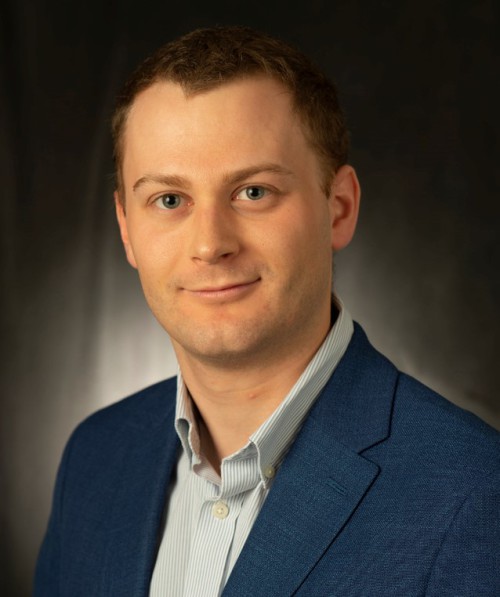
Katherine Gruber
Sikorsky, a Lockheed Martin Company
Katherine (Kate) Gruber, Aeronautical Engineer Senior at Sikorsky, a Lockheed Martin company, is recognized for her strategic contributions to digital transformation, validating models for future attack reconnaissance aircraft (FARA), technical leadership on the NASA Dragonfly mission, and advancing rotorcraft aerodynamic design through innovative computational fluid dynamics methods. Kate’s analyses were instrumental to Dragonfly’s successful Critical Design Review in March of 2025. Her work and leadership have made a lasting impact on her team and the broader vertical flight community.
Recognizes an outstanding career-to-date contribution to vertical flight technology by a society member who is 35 years old or younger.

Paul E. Haueter Award
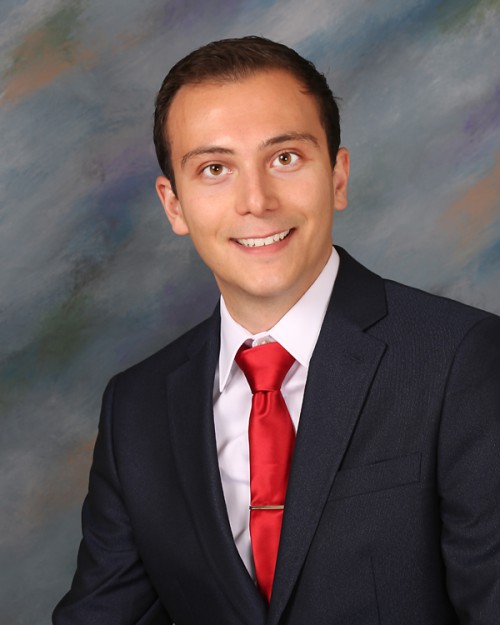
Jason Satira
Sikorsky, a Lockheed Martin Company
Jason Satira, Advanced Concepts Staff Engineer and Aircraft Technical Lead at Sikorsky, a Lockheed Martin company, is recognized for leading the development and flight testing of the innovative Rotor Blown Wing (RBW) aircraft concept. For the last five years, he’s been designing and building prototypes of them. If you talk with him, you will experience in exciting detail the nuance of every design, every test, every emotional low and high that turned an idea into a viable aircraft configuration. Sikorsky has rebranded the aircraft configuration as Nomad™ UAS, and is now under contract with DARPA to make a 330-pound version. His work has advanced this novel VTOL configuration into a viable platform for next-generation unmanned aerial systems.
Presented for an outstanding technical innovation in the development of vertical takeoff and landing aircraft other than a helicopter or other operational VTOL aircraft.
Grover E. Bell Award
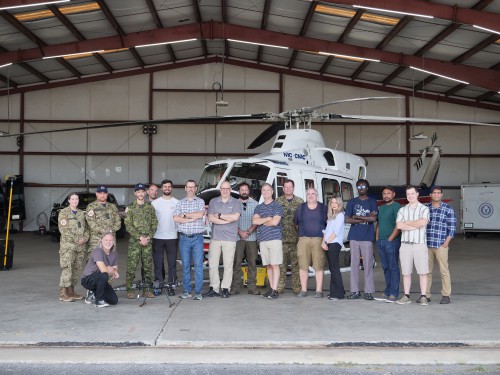
National Research Council of Canada’s AASCEND team
National Research Council of Canada
In a landmark achievement, the AASCEND team advanced full-scale rotorcraft autonomy by integrating an autonomous Bell 412 into a live military air assault exercise alongside crewed helicopters in degraded conditions—demonstrating supervised autonomy within an operational formation in non-segregated airspace. This breakthrough validates a scalable path for human-autonomy teaming and marks a significant step forward in autonomous vertical flight.
Given for an outstanding research and experimentation contribution to the field of vertical flight development brought to fruition during the preceding 18 months.
Grover E. Bell Award
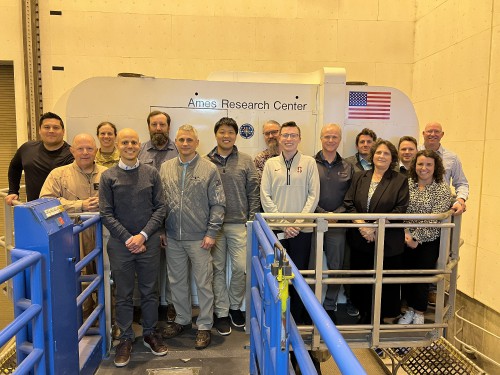
DEVCOM Aviation & Missile Center ARCTIC Team
US Army DEVCOM AvMC
The ARCTIC team is recognized for advancing high-fidelity rotorcraft research through ARCTIC-6, where advanced autonomy—real-time path planning, obstacle avoidance, and safe landing selection—was integrated into a full-motion simulation of next-generation tiltrotor aircraft within dynamic threat environments. This achievement enabled realistic evaluation of autonomous operations in complex scenarios, reducing risk for future flight testing and accelerating next-generation vertical lift capabilities.
Given for an outstanding research and experimentation contribution to the field of vertical flight development brought to fruition during the preceding 18 months.
Supplier Excellence Award
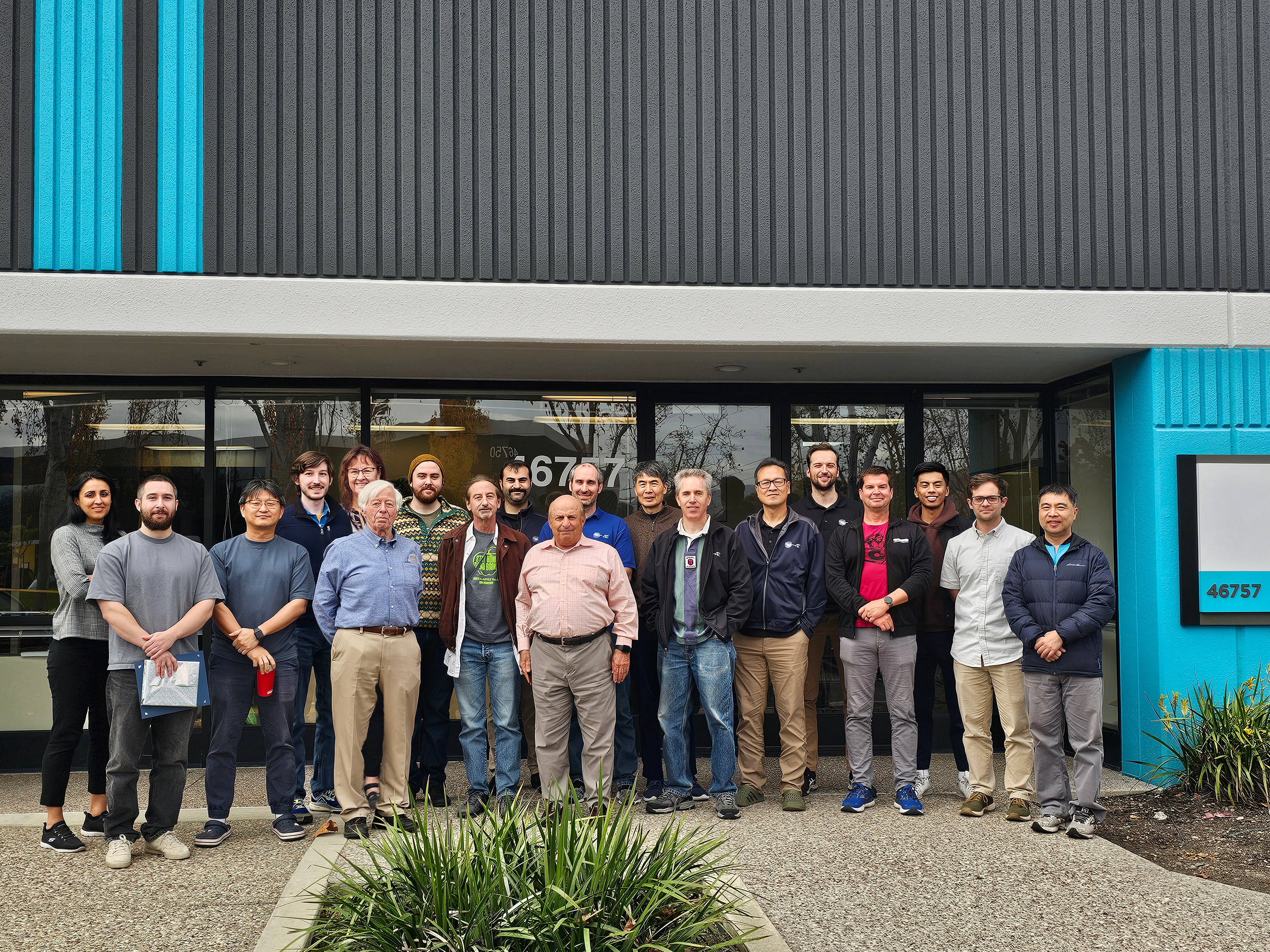
Advanced Rotorcraft Technology, Inc. (ART)
Advanced Rotorcraft Technology, Inc. (ART)
Through its industry-standard tools—FLIGHTLAB and the Rotorcraft Comprehensive Analysis System (RCAS)—ART has enabled high-fidelity analysis, reduced development risk, and accelerated innovation across military, commercial, and emerging VTOL programs worldwide, strengthening the entire vertical flight ecosystem.
Created in 1995, the VFS Supplier Excellence Award is given to a supplier who, through the quality, innovativeness and cost-effective technology of its products, has made a notable contribution to improving the state of the art of vertical flight aircraft.
Harry T. Jensen Award
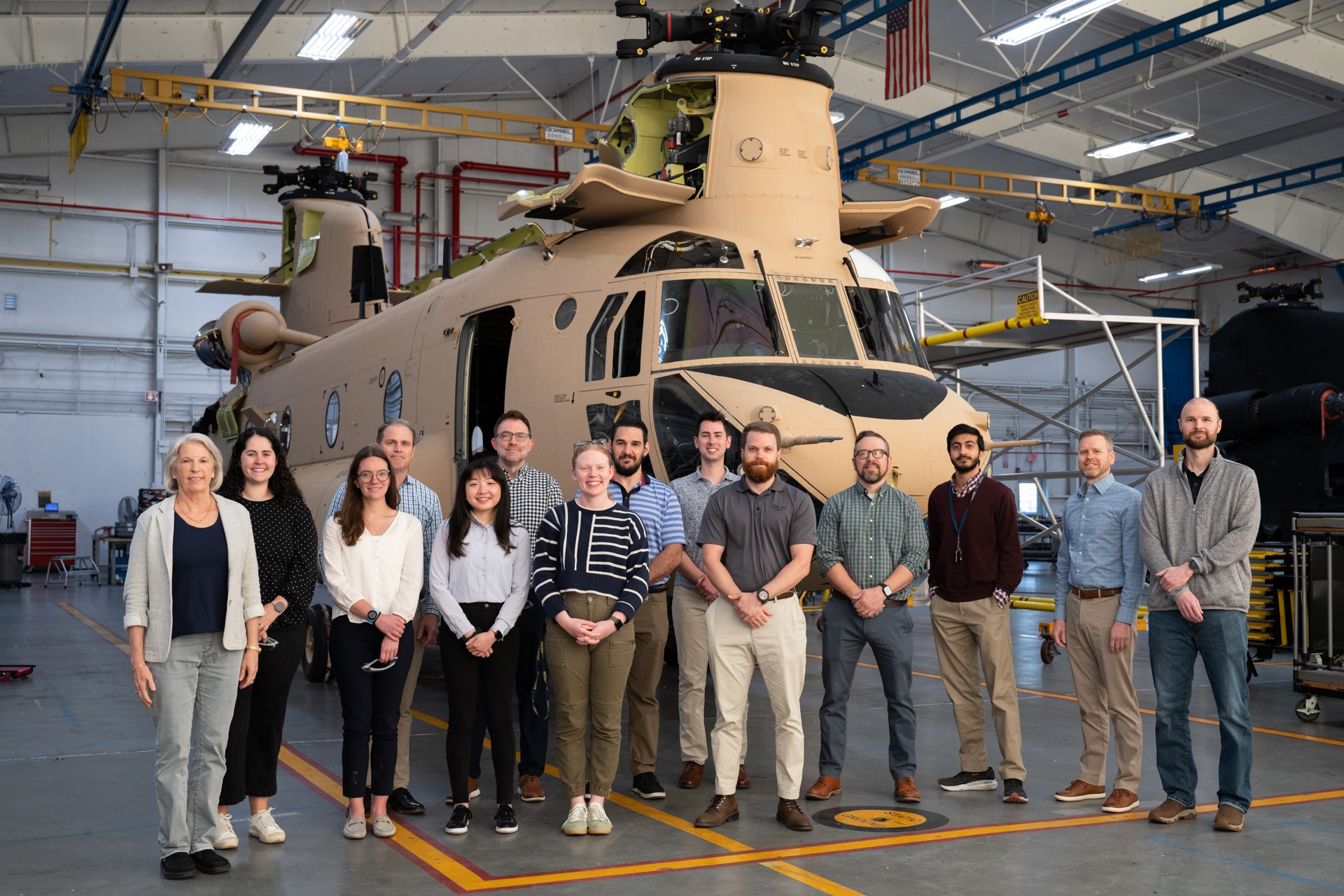
Chinook Airframe MSG-3 Team
The Boeing Company
This year’s Harry T. Jensen Award recognizes the Chinook Airframe MSG-3 Team for pioneering MSG-3 maintenance optimization for military rotorcraft. Using digital-twin analytics, crack-growth analysis, and automated tools, the team developed a data-driven, traceable maintenance framework that delivered up to 80% improvements in key reliability metrics and nearly a 50% reduction in maintenance man-hours—significantly enhancing fleet readiness.
Given in recognition of an outstanding contribution to the improvement of rotorcraft reliability, maintainability, or safety through improved design brought to fruition during the preceding 18 months.
Robert L. Pinckney Award
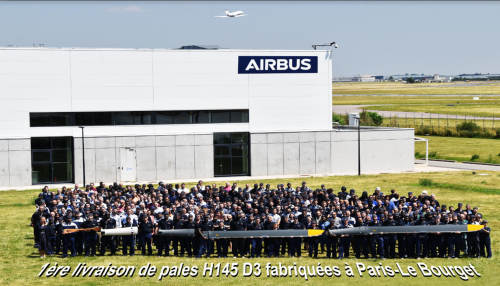
Airbus Helicopters Rotor Blade Team
Airbus Helicopters
Airbus Helicopters Rotor Blade Team is recognized for industrializing a breakthrough infusion-based manufacturing process for the H145 five-bladed rotor system. Transitioning from traditional pre-preg methods to a more automated approach, the team improved production reliability and scalability, bringing the innovation from prototype to full-rate production in just two years and achieving output exceeding 1,000 blades annually — setting a new benchmark for rotor blade manufacturing
Is given in recognition of notable achievement in manufacturing research and development for rotorcraft or rotorcraft components brought to fruition in recent years.
Howard Hughes Award
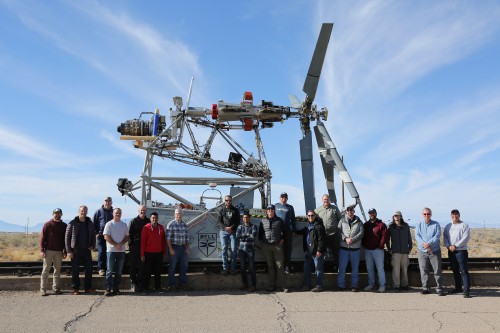
Bell High-Speed VTOL Track Test Team
Bell Helicopters
This year’s Howard Hughes Award recognizes the Bell High-Speed VTOL Track Test Team for a groundbreaking “stop-fold” rotor demonstration. In a first-of-its-kind achievement, the team executed a powered transition from rotor-driven flight to jet propulsion—accelerating with a proprotor, transferring thrust to a turbofan, and stopping and folding the rotor in motion to enable high-speed flight. This breakthrough resolves the long-standing tradeoff between efficient hover and high-speed cruise, paving the way for next-generation VTOL aircraft exceeding 400 knots.
Given in recognition of an outstanding improvement in fundamental vertical flight technology brought to fruition during the preceding 18 months.
John J. Schneider Historical Achievement Award
Ben Oster
The Boeing Company
This year’s recipient, Ben Oster, Senior Manager for Cargo/Utility/Tiltrotor System Safety at Boeing, is recognized for preserving and promoting vertical flight history through the creation of the Ascending Innovation exhibit at the Glenn H. Curtiss Museum, pairing artifacts from early 20th-century vertical-flight pioneers with Boeing’s Cargo Air Vehicle (CAV) Program. He led logistics to move and assemble the CAV, compiled archival flight data and never-before-public footage, and partnered with Cornell University to integrate operational CAV components into undergraduate labs. By linking historic milestones with modern eVTOL technology and fostering educational partnerships, he has inspired and engaged the next generation of vertical flight engineers.
Given in recognition of distinguished achievement of an individual in encouraging appreciation of and enhancing access to the history and legacy of vertical flight aircraft.
Vertical Flight Heritage Site
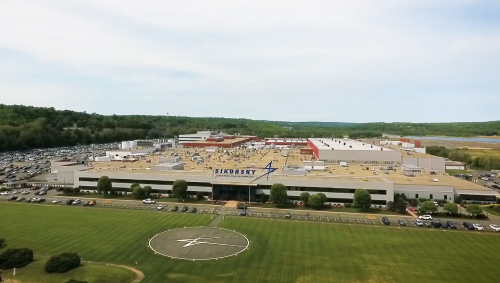
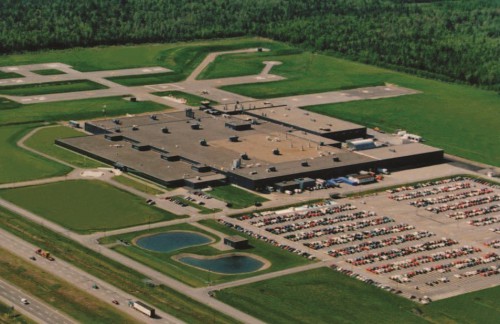
The Sikorsky Aircraft Stratford Facility
Sikorsky, a Lockheed Martin Company
The Sikorsky Aircraft Stratford Facility is recognized as a Vertical Flight Heritage Site for its enduring impact on the evolution of vertical flight. Since 1955, the site has produced more than 8,000 helicopters, including numerous industry firsts and the world’s most successful helicopter program, the BLACK HAWK. As the home of Igor Sikorsky and a continuous center of innovation, it stands as a lasting symbol of pioneering achievement in vertical flight.
Given to recognize and preserve noteworthy and significant contributions made in both the theory and practice of helicopter and other VTOL aircraft technology. This award promotes the rich history of the vertical lift industry to the public.
Vertical Flight Heritage Site
The Bell Textron Canada Mirabel Facility
The Bell Textron Canada
The Bell Textron Canada Mirabel facility is recognized as a Vertical Flight Heritage Site for its enduring impact on global helicopter manufacturing. Since 1986, the site has produced more than 6,000 helicopters and served as the development and first-flight site for multiple Bell aircraft. Integrating design, production, flight test, and certification, it stands as a lasting symbol of innovation and excellence in vertical flight.
Given to recognize and preserve noteworthy and significant contributions made in both the theory and practice of helicopter and other VTOL aircraft technology. This award promotes the rich history of the vertical lift industry to the public.
Captain William J. Kossler, USCG Award
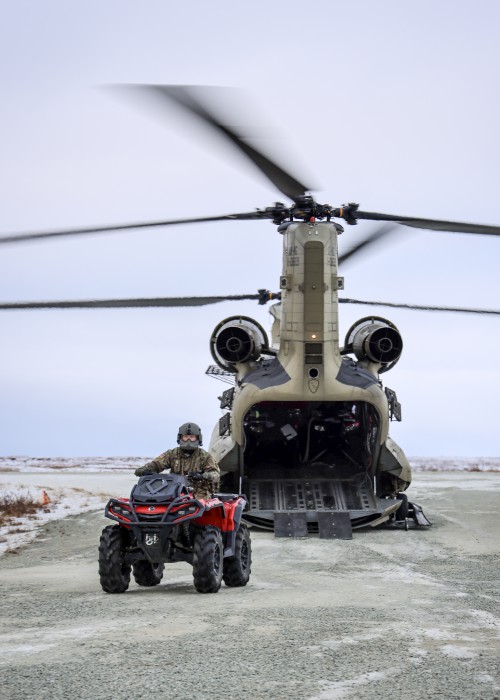
207th Aviation Battalion, Alaska Army National Guard
Alaska Army National Guard
The 207th Aviation Battalion, Alaska Army National Guard is recognized for its extraordinary humanitarian response to Typhoon Halong. The battalion's aviation crew executed a rapid, sustained, and technically demanding airlift and rescue operation that saved lives, enabled emergency medical care, and accelerated community recovery across remote regions of western Alaska.
On October 12, 2025, facing extreme weather, limited visibility, and rapidly deteriorating conditions, the 207th launched aviation assets from Anchorage to Bethel to conduct immediate rescue and evacuation operations. Their aircrews became the first point of contact for many isolated residents, delivering lifesaving medical aid, conducting welfare checks, and performing door-to-door searches in communities cut off from communications and infrastructure. During the initial rescue phase, the battalion evacuated 501 civilians, which is the largest airlift of Alaskans since World War II and the largest civilian evacuation in National Guard history.
The scope, scale, and flawless execution of the 207th response to Typhoon Halong exemplifies the highest traditions of military aviation in humanitarian assistance and disaster relief.
Given for the greatest achievement during the preceding 18 months related to the operation or application of a vertical flight aircraft.
Dr. Alexander Klemin Award
Nicholas Lappos
Sikorsky, a Lockheed Martin Company
Throughout his career of more than 50 years, Nick Lappos has been a consummate test pilot, an innovative engineer, an inspiring leader, and a passionate advocate for vertical flight and its safety. His 2019 Nikolsky Lecture was a clarion call to dramatically change the design philosophy for next-generation aircraft—to move away from simply adding extra strength (and weight) to achieve safety. He played key roles in the development of the S-76®, UH-60, RAH-66, ABCTM, Fantail, Shadow, CH-53E, and S-92® helicopters. He has been one of the vertical flight industry’s greatest advocates for technical innovation. He has piloted new aircraft, engineered new technologies, and given guidance to the agencies responsible for overseeing and regulating the industry. His impact on the community makes him richly deserving of the honor of the Klemin Award.
Given for notable achievement in advancement of vertical flight aeronautics.
Honorary Fellows
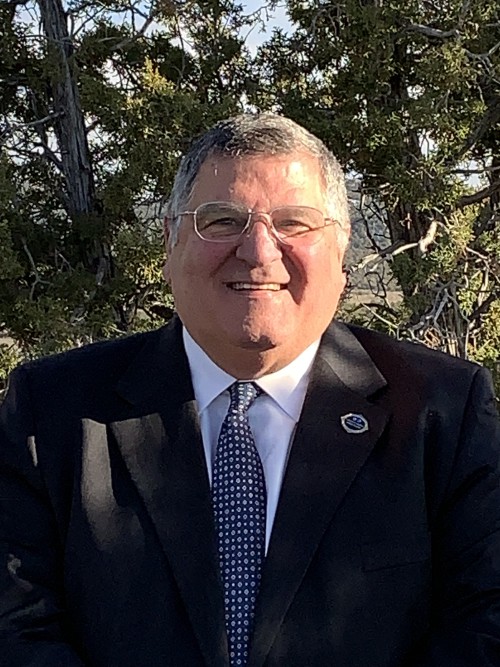
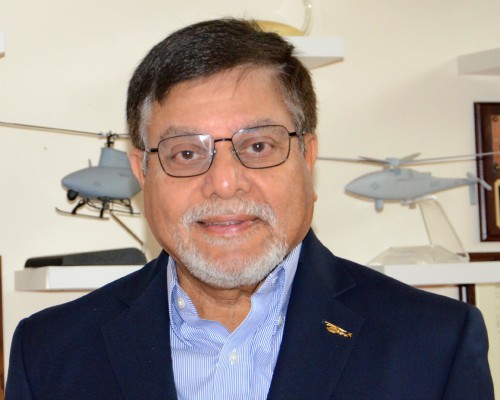
Ajay Sehgal
Senior Technical Fellow EMERITUS
KBR
Ajay Sehgal, Senior Technical Fellow Emeritus at KBR, is recognized for over 50 years of sustained and distinguished contributions to vertical flight across industry, government, and academia through technical innovation, program leadership, mentorship, and enduring dedication to the Vertical Flight Society; and for influential work on the design, testing, certification, and sustainment of manned and unmanned rotorcraft, resulting in multiple U.S. patents and inspiring future generations of vertical flight engineers.
Honorary Fellowships are granted to Society members whose career-based leadership, vision or other meritorious contribution has advanced significantly the interests of Vertical Flight Society and the vertical flight community. The granting of Honorary Fellows shall be in perpetuity and limited in number to two per annum.
Honorary Fellows
Marilyn J. Smith
Georgia Institute of Technology
Marilyn J. Smith, Professor at the Georgia Institute of Technology, is recognized for her pioneering contributions to computational rotorcraft aeromechanics and her global leadership in advancing vertical flight. She has been a trailblazer for women in Aeronautics, breaking barriers throughout her career. Beyond her service to VFS and Georgia Tech, she has a long track record of service to the community. She has focused on the future of STEM, in particular for women and rural communities in the South, most recently funding a high school camp focused on drones. She personifies the requirements of a VFS Honorary Fellow.
Honorary Fellowships are granted to Society members whose career-based leadership, vision or other meritorious contribution has advanced significantly the interests of Vertical Flight Society and the vertical flight community. The granting of Honorary Fellows shall be in perpetuity and limited in number to two per annum.

Alex M. Stoll Award
William Staruk
William Staruk, Rotor Dynamics Staff Engineer at Joby Aviation and in previous positions at Aurora Flight Sciences, and NASA-Ames, exemplifies the qualities envisioned for this award, making a meaningful impact both professionally and personally within the workplace and across the broader vertical flight community. He frequently questions his technical work and that of his peers with the core focus of seeking understanding and working to achieve parity with theory, analysis and physical articles. He also is known for making his peers' days at Joby and VFS brighter with his laughter, humor and endless energy.
The Vertical Flight Society and the Stoll Family are proud to present the Alex M. Stoll Award, established 2025 in memory of Alex M. Stoll. The award recognizes a professional in the field of vertical flight who, like Alex, demonstrates an exceptional commitment to advancing their organization’s mission while making extraordinary contributions to the well-being and happiness of colleagues and elevating organizational culture and morale.