


Vertical Flight Society Award Recipients
Howard Hughes Award
The Howard Hughes Award is given for an outstanding improvement in fundamental vertical flight technology brought to fruition during the preceding 18 months. The award is intended to foster accomplishments in the basic science and technology disciplines of the vertical flight community, such as aerodynamics, dynamics, structures, propulsion, human factors, electronics, simulation, testing and systems integration. The award was established in 1977 by Hughes Helicopters to honor the memory of Howard Hughes and his pioneering accomplishments in aviation.
2026
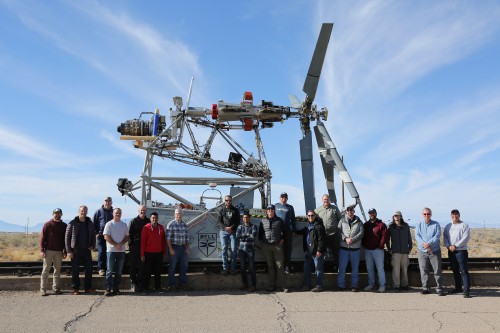
Bell High-Speed VTOL Track Test Team
Bell Helicopters
For a groundbreaking “stop-fold” rotor demonstration. In a first-of-its-kind achievement, the team executed a powered transition from rotor-driven flight to jet propulsion—accelerating with a proprotor, transferring thrust to a turbofan, and stopping and folding the rotor in motion to enable high-speed flight.
Bell Helicopters
For a groundbreaking “stop-fold” rotor demonstration. In a first-of-its-kind achievement, the team executed a powered transition from rotor-driven flight to jet propulsion—accelerating with a proprotor, transferring thrust to a turbofan, and stopping and folding the rotor in motion to enable high-speed flight.
2025
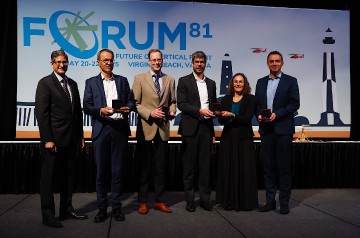
Airbus Helicopters Racer Team
Airbus Helicopters
Developed under the Clean Sky 2 program, the Racer high-speed demonstrator surpassed 260 mph (420 km/h) shortly after its first flight. With innovations in aerodynamics, propulsion and systems design, Racer represents a leap forward in the development of fast, fuel-efficient rotorcraft.
Airbus Helicopters
Developed under the Clean Sky 2 program, the Racer high-speed demonstrator surpassed 260 mph (420 km/h) shortly after its first flight. With innovations in aerodynamics, propulsion and systems design, Racer represents a leap forward in the development of fast, fuel-efficient rotorcraft.
2024
Free-Fly CFD-CSD-FCS Modeling and Simulation Development Team
Sikorsky, a Lockheed Martin Company
For outstanding improvements to the vertical flight modeling and simulation technology and brought it to fruition to support advanced rotorcraft design and flight test.
Sikorsky, a Lockheed Martin Company
For outstanding improvements to the vertical flight modeling and simulation technology and brought it to fruition to support advanced rotorcraft design and flight test.

2023
No Award Presented
2022
Mars Helicopter Ingenuity Team
NASA Jet Propulsion Laboratory (JPL), NASA Ames and Langley Research Centers, Lockheed Martin Space, AeroVironment, Qualcomm, SolAero and University of Maryland
For accomplishing the first powered flight on another planet on April 19, 2021, with a 39.1 sec. flight of the 4-lb (1.8-kg) Ingenuity helicopter on Mars. It still continues its mission with more than 20 successful flights made to date.
NASA Jet Propulsion Laboratory (JPL), NASA Ames and Langley Research Centers, Lockheed Martin Space, AeroVironment, Qualcomm, SolAero and University of Maryland
For accomplishing the first powered flight on another planet on April 19, 2021, with a 39.1 sec. flight of the 4-lb (1.8-kg) Ingenuity helicopter on Mars. It still continues its mission with more than 20 successful flights made to date.

2021
SB>1 Defiant Main Rotor Gearbox Team - for the US Army's JMR Technology Development Program
US Army; Sikorsky, a Lockheed Martin Company; and The Boeing Company
For the US Army’s Joint Multirole (JMR) Technology Development program, the team developed an advanced coaxial main rotor gearbox that breaks performance barriers for medium lift rotorcraft through the strategic incorporation and maturation of low technology readiness level (TRL) technologies, and advanced analytical tools and/ methods.
US Army; Sikorsky, a Lockheed Martin Company; and The Boeing Company
For the US Army’s Joint Multirole (JMR) Technology Development program, the team developed an advanced coaxial main rotor gearbox that breaks performance barriers for medium lift rotorcraft through the strategic incorporation and maturation of low technology readiness level (TRL) technologies, and advanced analytical tools and/ methods.

2020
CH-53K EGR Team
Sikorsky, a Lockheed Martin Company; General Electric; the US Naval Air Systems Command (NAVAIR); and the US Army Combat Capabilities Development Command (CCDC) Aviation and Missile Center (AvMC).
This year’s recipient of the Howard Hughes Award, given in recognition of an outstanding improvement in fundamental helicopter technology brought to fruition in the previous 18 months, is the CH-53K EGR Team, including team members from Sikorsky, a Lockheed Martin Company; General Electric; the US Naval Air Systems Command (NAVAIR); and the US Army Combat Capabilities Development Command (CCDC) Aviation and Missile Center (AvMC).
Sikorsky, a Lockheed Martin Company; General Electric; the US Naval Air Systems Command (NAVAIR); and the US Army Combat Capabilities Development Command (CCDC) Aviation and Missile Center (AvMC).
This year’s recipient of the Howard Hughes Award, given in recognition of an outstanding improvement in fundamental helicopter technology brought to fruition in the previous 18 months, is the CH-53K EGR Team, including team members from Sikorsky, a Lockheed Martin Company; General Electric; the US Naval Air Systems Command (NAVAIR); and the US Army Combat Capabilities Development Command (CCDC) Aviation and Missile Center (AvMC).

2019
Advanced Chinook Rotor Blade (ACRB) Team
The Boeing Company, US Army Engineering Directorate, and US Army Aviation Development Directorate
The ACRB team developed, qualified, and flight tested backward-compatible rotor blades for the H-47 that increases lift by over 1600 lb (7.1 kN) at high/hot conditions without adversely affecting other performance factors such as vibration and forward flight speed or requiring additional power.
The Boeing Company, US Army Engineering Directorate, and US Army Aviation Development Directorate
The ACRB team developed, qualified, and flight tested backward-compatible rotor blades for the H-47 that increases lift by over 1600 lb (7.1 kN) at high/hot conditions without adversely affecting other performance factors such as vibration and forward flight speed or requiring additional power.

2018
The AACUS Development Team
The Office of Naval Research and Aurora Flight Sciences’ AACUS Team
The AACUS team developed and successfully demonstrated a fully autonomous helicopter flight capability. Over the course of ONR’s five-year long Innovative Naval Prototype (INP) project, the AACUS team designed a hardware and software applique “kit” that enables the host helicopter platform to interpret and execute high-level logistics mission tasks.
The Office of Naval Research and Aurora Flight Sciences’ AACUS Team
The AACUS team developed and successfully demonstrated a fully autonomous helicopter flight capability. Over the course of ONR’s five-year long Innovative Naval Prototype (INP) project, the AACUS team designed a hardware and software applique “kit” that enables the host helicopter platform to interpret and execute high-level logistics mission tasks.

2017
CH-53K Heavy Lift Helicopter Development Team
NAVAIR; US Marine Corps; Sikorsky Aircraft
For bringing to fruition, through successful flight demonstration and USMC operational assessment, multiple integrated technologies that together establish an unprecedented vertical heavy lift capability for the US Marine Corps.
NAVAIR; US Marine Corps; Sikorsky Aircraft
For bringing to fruition, through successful flight demonstration and USMC operational assessment, multiple integrated technologies that together establish an unprecedented vertical heavy lift capability for the US Marine Corps.

2016
Multi-Role Rotor-Adaptive Performance Team
For demonstrating a new active rotor design that would increase rotorcraft hover and cruise performance while simultaneously reducing vibration and noise for current and future rotorcraft
For demonstrating a new active rotor design that would increase rotorcraft hover and cruise performance while simultaneously reducing vibration and noise for current and future rotorcraft

2015
MATRIX Technology Team
Sikorsky
For achieving completely autonomous flight with an S-76 helicopter, including takeoff, path planning, navigation to the objective, and landing zone selection
Sikorsky
For achieving completely autonomous flight with an S-76 helicopter, including takeoff, path planning, navigation to the objective, and landing zone selection

2014
High Fidelity Icing Analysis and Validation Team
NRTC/VLC
For the contributions towards the understanding of fundamental aspects of rotorcraft icing and for the validation of an icing analysis tool suite which will improve safety and reduce cost and schedule for certification and qualification of rotorcraft
NRTC/VLC
For the contributions towards the understanding of fundamental aspects of rotorcraft icing and for the validation of an icing analysis tool suite which will improve safety and reduce cost and schedule for certification and qualification of rotorcraft

2013
Active Ground Resonance Stability Augmentation Design & Test Team
Sikorsky Aircraft Corporation
For successfully demonstrating the ability of full-authority control systems to enhance aeromechanical stability in a safe and effective manner
Sikorsky Aircraft Corporation
For successfully demonstrating the ability of full-authority control systems to enhance aeromechanical stability in a safe and effective manner

2012
X3 Team
Eurocopter
On May 12, 2011, the X3 surpassed its goal of 220 knots and reached a speed milestone. During stable, level flight, the hybrid demonstrator maintained a true airspeed of 232 knots
Eurocopter
On May 12, 2011, the X3 surpassed its goal of 220 knots and reached a speed milestone. During stable, level flight, the hybrid demonstrator maintained a true airspeed of 232 knots

2011
X2 Technology Demonstrator Team
Sikorsky
For marking the fastest airspeed ever achieved by a true helicopter in level flight, and expanding the operational flight envelope for future practical and producible helicopter designs.
Sikorsky
For marking the fastest airspeed ever achieved by a true helicopter in level flight, and expanding the operational flight envelope for future practical and producible helicopter designs.
2010
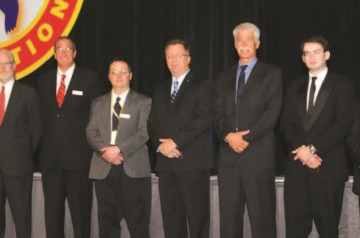
AH-64D Apache Block III Development Team
US Army, the Boeing Company, and Northstar Aerospace Corporation
For the first time in aviation history, successfully demonstrated the Split-Torque Face Gear Technology in a rotorcraft transmission.
US Army, the Boeing Company, and Northstar Aerospace Corporation
For the first time in aviation history, successfully demonstrated the Split-Torque Face Gear Technology in a rotorcraft transmission.

2009
Smart Rotor Team
The Boeing Company, DARPA, NASA, US Army, US Air Force, Massachusetts Institute of Technology, University of California at Los Angeles and the University of Maryland
The Smart Rotor Team successfully tested the Boeing Smart Rotor (the Boeing Smart Materials Actuated Rotor Technology) during 2008 in the large-scale wind tunnel known as the NFAC, demonstrating the feasibility, robustness, authority, and aeromechanical benefits of one-blade, smart material actuation.
The Boeing Company, DARPA, NASA, US Army, US Air Force, Massachusetts Institute of Technology, University of California at Los Angeles and the University of Maryland
The Smart Rotor Team successfully tested the Boeing Smart Rotor (the Boeing Smart Materials Actuated Rotor Technology) during 2008 in the large-scale wind tunnel known as the NFAC, demonstrating the feasibility, robustness, authority, and aeromechanical benefits of one-blade, smart material actuation.

2008
Network Centric Operations (NCO) Technology Development Team
US Army Aviation Applied Technology Directorate (AATD), AMRDEC Aviation Systems Integration Facility (ASIF), The Boeing Company and Rockwell Collins.
The NCO Team during 2007 collaborated to develop and demonstrate substantial improvements in battlefield situational awareness and combat effectiveness that can be achieved via incorporation of advanced mission architectures, high bandwidth communications systems and advanced display systems.
US Army Aviation Applied Technology Directorate (AATD), AMRDEC Aviation Systems Integration Facility (ASIF), The Boeing Company and Rockwell Collins.
The NCO Team during 2007 collaborated to develop and demonstrate substantial improvements in battlefield situational awareness and combat effectiveness that can be achieved via incorporation of advanced mission architectures, high bandwidth communications systems and advanced display systems.

2007
Army/NASA/Bell QTR Aeroelastic Test Team
US Army, NASA, and Bell Helicopters
The fundamental questions regarding the influence of aerodynamic interference of this configuration on both stability and rotor loads and vibrations were explored. This test produced data that defined the effect of the QTR aerodynamic interference on the whirl flutter stability of the configuration. No stability degradation was found due to the aerodynamic interference of the forward wing and proprotor.
US Army, NASA, and Bell Helicopters
The fundamental questions regarding the influence of aerodynamic interference of this configuration on both stability and rotor loads and vibrations were explored. This test produced data that defined the effect of the QTR aerodynamic interference on the whirl flutter stability of the configuration. No stability degradation was found due to the aerodynamic interference of the forward wing and proprotor.

2006
Rotor Ice Protection System (RIPS) Development Team
Sikorsky
This team developed technology, system logic, and test techninques to provide all-weather capabilities for the S-92A, yielding significant improvements in passenger acceptance for helicopters, while improving helicopter productivity and safety.
Sikorsky
This team developed technology, system logic, and test techninques to provide all-weather capabilities for the S-92A, yielding significant improvements in passenger acceptance for helicopters, while improving helicopter productivity and safety.

2005
The Active Vibration Control Team
Sikorsky
The team developed and gained FAA certification of a robust, self-adaptive active vibration control system on the S-92 helicopter. This successful development helped spur the US Army to decide to select the AVC as the baseline vibration reduction system for the UH-60M Black Hawk.
Sikorsky
The team developed and gained FAA certification of a robust, self-adaptive active vibration control system on the S-92 helicopter. This successful development helped spur the US Army to decide to select the AVC as the baseline vibration reduction system for the UH-60M Black Hawk.

2004
Higher Harmonic Control Aeroacoustic Rotor (HART II) Test and Analysis Team
In recognition of an outstanding improvement in fundamental helicopter technology.
In recognition of an outstanding improvement in fundamental helicopter technology.

2003
Sikorsky S-92 Flaw-Tolerance Design and Test Team
Sikorsky Aircraft Corp.
For outstanding improvement in fundamental helicopter technology.
Sikorsky Aircraft Corp.
For outstanding improvement in fundamental helicopter technology.

2002
NASA Tiltrotor Aeroacoustic Code Team -TRAC Team
NASA
For completing a successful eight year effort to develop and validate the tiltrotor aeroacoustic code.
NASA
For completing a successful eight year effort to develop and validate the tiltrotor aeroacoustic code.

2001
The Sikorsky/ Honeywell S-76 Enhanced Ground Proximity Warning System Team
Honeywell Aerospace, Sikorsky Aircraft Corp., and the FAA
The Team recognized for an outstanding improvement in fundamental helicopter technology.
Honeywell Aerospace, Sikorsky Aircraft Corp., and the FAA
The Team recognized for an outstanding improvement in fundamental helicopter technology.

2000
No Award Presented
1999
Dennis P. McGuire
1998
Japan OHX Engineering Team
For outstanding improvement in fundamental Helicopter Technology.
For outstanding improvement in fundamental Helicopter Technology.

1997
Comanche Team
US Army/Boeing/Sikorsky
For its development, for the first time in twenty years, of an all-new helicopter for the US army.
US Army/Boeing/Sikorsky
For its development, for the first time in twenty years, of an all-new helicopter for the US army.

1996
Advanced Technologies Inc.
For an outstanding improvement in fundamental helicopter technology. The kit-built, single- seat 254, with an empty weight of 254 lb. , is classed as an ultralight aircraft and therefore needs no pilot license to fly.
For an outstanding improvement in fundamental helicopter technology. The kit-built, single- seat 254, with an empty weight of 254 lb. , is classed as an ultralight aircraft and therefore needs no pilot license to fly.

1995
Aircraft Advanced Growth Blade Team
Sikorsky
Sikorsky

1994
Special Operations Helicopter Design and Development Team
US Army
US Army

1993
AATD D/NAPS Team
AATD, McDonnell Douglas Helicopter Systems and Sikorsky Aircraft
In recognition of an outstanding improvement in fundamental helicopter technology.
AATD, McDonnell Douglas Helicopter Systems and Sikorsky Aircraft
In recognition of an outstanding improvement in fundamental helicopter technology.

1992
Fantail Team
Boeing-Sikorsky
Boeing-Sikorsky
1991
Dr. W.J. McCroskey
The Aeroflightdynamics Directorate, US Army AVSCOM, Ames Research Center
For his quarter-century of work on computational fluid dynamics in helicopter analysis.
The Aeroflightdynamics Directorate, US Army AVSCOM, Ames Research Center
For his quarter-century of work on computational fluid dynamics in helicopter analysis.

1990
Alan E. Staple and Stephen P. King
Engineer
Westland Helicopters
For their development of active vibration control systems.
Engineer
Westland Helicopters
For their development of active vibration control systems.

1989
Rotorcraft Noise Reduction Team
AHS/NASA
For the NASA/ AHS National Rotorcraft Noise Reduction Program.
AHS/NASA
For the NASA/ AHS National Rotorcraft Noise Reduction Program.
1988
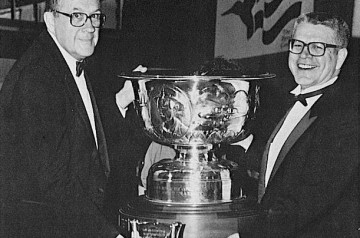
360 Team
Boeing Helicopters
Boeing Helicopters

1987
NOTAR Team
McDonnell Douglas
McDonnell Douglas

1986
Dennis R. Halwes
Bell Helicopter Textron
Dennis R. Halwes, Bell Helicopter Textron, principal engineer for structural dynamics, was named the recipient of Howard Hughes award for his invention of the Liquid Inertia Vibration Eliminator.
Bell Helicopter Textron
Dennis R. Halwes, Bell Helicopter Textron, principal engineer for structural dynamics, was named the recipient of Howard Hughes award for his invention of the Liquid Inertia Vibration Eliminator.

1985
Michael E. Tauber
Aerospace Engineer
NASA Ames Research Center
For his contributions to the development and application of ROT22, the first three dimensional full potential computer code capable of predicting the transonic flow around helicopter rotor blades.
Aerospace Engineer
NASA Ames Research Center
For his contributions to the development and application of ROT22, the first three dimensional full potential computer code capable of predicting the transonic flow around helicopter rotor blades.

1984
Tommie L. Wood and Donald L. Bloom
Bell Helicopter
For their work in developing a new understanding of the fundamental aerodynamic interaction between a main rotor and tail rotor during low speed flight.
Bell Helicopter
For their work in developing a new understanding of the fundamental aerodynamic interaction between a main rotor and tail rotor during low speed flight.
1983
Dr. C. Eugene Hammond
Chief of the Aeromechanics Technical Area
The Applied Technology Laboratory (ATL) of AVRADCOM
Hammond was honoured in recognition of the successful development and flight test of the Higher Harmonic Control (HHC) system by the AVRADCOM/ NASA/ Hughes team he led.
Chief of the Aeromechanics Technical Area
The Applied Technology Laboratory (ATL) of AVRADCOM
Hammond was honoured in recognition of the successful development and flight test of the Higher Harmonic Control (HHC) system by the AVRADCOM/ NASA/ Hughes team he led.
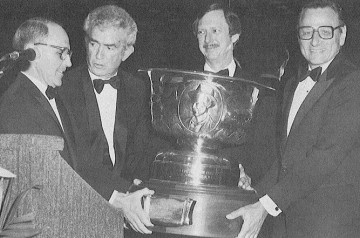
1982
Dr. Fredric H. Schmitz
For his innovative developments in experimental techniques and analytical procedures that have led, for the first time, to an understanding of the physical phenomena associated with the aerodynamically generated noise from helicopter rotors.
For his innovative developments in experimental techniques and analytical procedures that have led, for the first time, to an understanding of the physical phenomena associated with the aerodynamically generated noise from helicopter rotors.

1981
Robert A. Ormiston
Chief Rotorcraft Dynamics Division, Aeromechanics Laboratory
U.S. Army Research & Technology Laboratories
For his outstanding contributions to the establishment and improvement of the fundamental technology of rotorcaft dynamics.
Chief Rotorcraft Dynamics Division, Aeromechanics Laboratory
U.S. Army Research & Technology Laboratories
For his outstanding contributions to the establishment and improvement of the fundamental technology of rotorcaft dynamics.

1980
Leone U. Dadone
Senior Engineer
Boeing Vertol Company
In recognition of his outstanding achievements in helicopter airfoil research.
Senior Engineer
Boeing Vertol Company
In recognition of his outstanding achievements in helicopter airfoil research.

1979
Anton J. Landgrebe

1978
John F. Ward
NASA Headquarters
For his original research on the effects of tip vortices on rotor loads, vibration, and acoustics, and contributions to the rotor blade tip vortex studies, and his continued devotion and leadership which made possible the design, fabrication, and successful flight testing of the OGEE tip.
NASA Headquarters
For his original research on the effects of tip vortices on rotor loads, vibration, and acoustics, and contributions to the rotor blade tip vortex studies, and his continued devotion and leadership which made possible the design, fabrication, and successful flight testing of the OGEE tip.

Cached October 13, 2026 10:09:51 PM CDT